
Products & Technology
From a good-looking sample to a repeatable specification
Separate surface finish, embossing and underlay choices so the approved sample becomes a clear production reference.
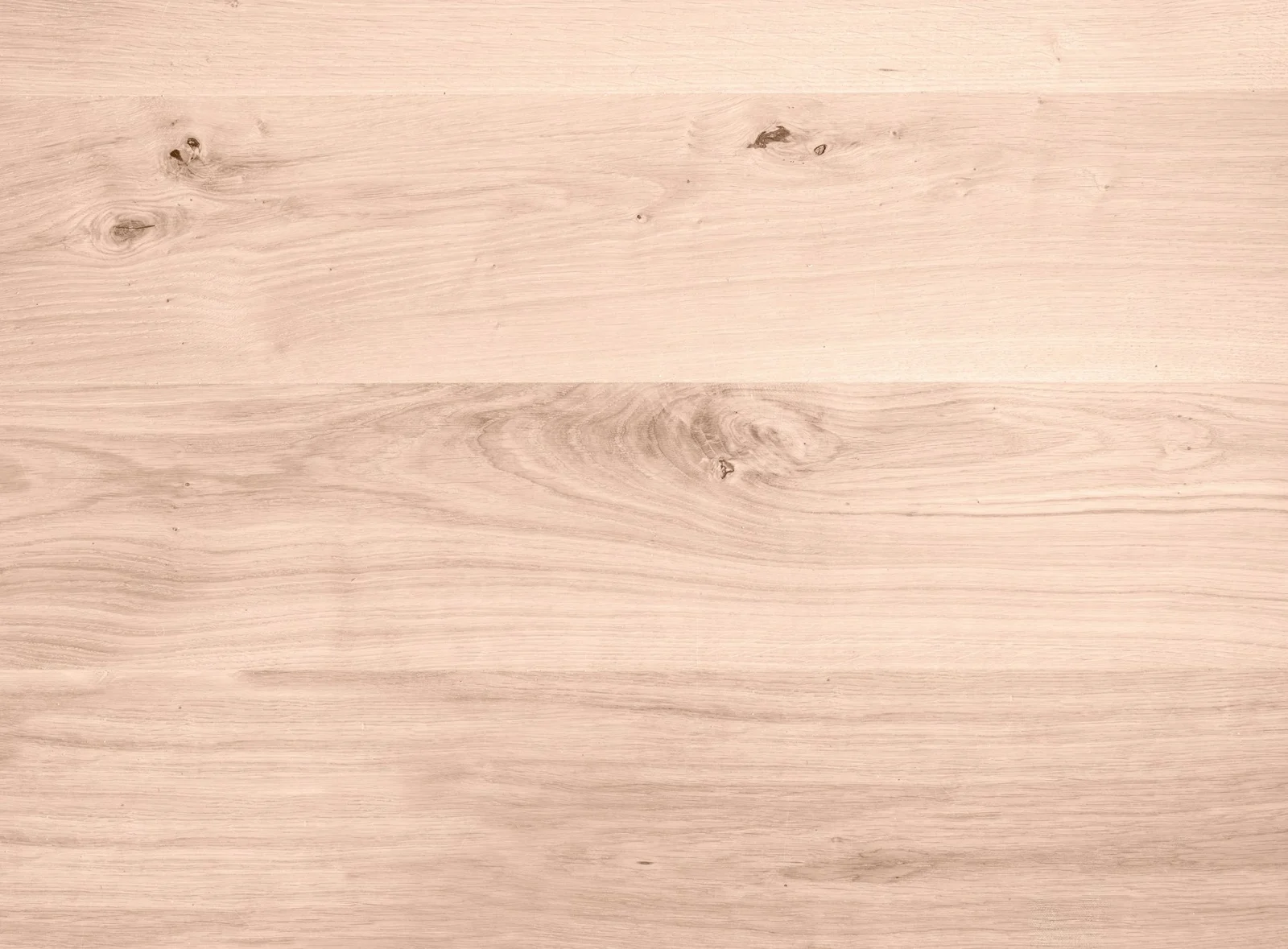
Give the sample a traceable reference.
Keep appearance and construction together.
Record revisions before approving production.
A sample can win a meeting and still leave the production brief incomplete. The surface looks right, the plank feels substantial, and the backing appears comfortable. Unless those observations become agreed references, the next sample round can reopen decisions everyone thought were settled.
The practical task is to separate visual approval from documented construction. Keep both, then make the relationship between them easy to follow.
Give finish and texture separate fields
Use one field for the surface finish and another for the embossing. Our product brief distinguishes Normal and Ultra matt finishes from Natural embossing, EIR and Stone embossing. These are selection labels that still need a supplier’s precise definition and an approved reference.
Embossed in register describes alignment between the printed design and surface texture. Unilin discusses that alignment separately from its excimer-based matte surface technology for SPC. The two address different aspects of a surface, so “EIR” alone does not resolve a finish request. Unilin surface technologies.
Ask the factory to identify the finish, texture reference and process being proposed. If two suppliers use the same marketing name, compare the samples and technical descriptions before treating their offers as equivalent. Do not assume that a technology mentioned on a website is available in every dimension or configuration.
Approve a set, not a memorable photograph
A practical sample review should make later comparison possible. Label each sample with its source, product reference, receipt date and revision. Keep the buyer’s comments attached to that identity. “The pale sample from the first meeting” is not a reference a production team can reliably use.
Review an assembled group of planks as well as a single piece. Record what was accepted about colour range, texture, gloss appearance and edge detail, and what needs another round. Use photographs as supporting notes, alongside retained physical references. When a visual issue is subjective, agree the viewing conditions and the person responsible for approval rather than inventing a numerical limit after the fact.
Write down the construction behind the face
The visible surface is only one part of the brief. Record length and width, panel thickness excluding attached pad, wear layer, joint system, bevel and backing. Preserve the supplier’s original thickness convention if it differs from yours, then resolve the difference explicitly.
Keep visual references linked to the exact construction. A surface approved on one demonstration board does not prove that the same effect has been approved on the configuration in the order. Ask the supplier to identify whether a later sample is made with the proposed production process and to state any substitutions.
Specify the pad beyond its material name
“IXPE” is a starting field, not a complete underlay specification. Ask for the supplier’s grade, thickness, intended application and technical sheet. Keep codes such as F10 or F15 exactly as supplied, with the supplier’s explanation. Do not translate a grade code into density, acoustic performance or a quality ranking unless the supporting document establishes that meaning.
MMFA treats the floor and underlay as a system selected for its intended use. Its underlay material guidance is presented alongside product-specific installation instructions, rather than as a universal substitute for them. MMFA underlay guidance.
For a product with an attached pad, ask whether any additional underlay is permitted. Karndean’s cited rigid-core instructions, for example, do not normally recommend a separate underlay. That is a useful prompt to ask the question, not a rule to transfer automatically to every SPC product. Karndean rigid-core guidance.
Turn performance claims into document requests
A pad that feels soft in the hand has not thereby demonstrated the performance of the installed floor. MMFA distinguishes mechanical, acoustic and other underlay performance considerations. Use those categories to request relevant evidence for the application, including the test method and the assembly to which a result applies. MMFA performance guidance.
Keep a proposed requirement separate from a demonstrated result. If the supplier has no supporting report for the selected assembly, record the gap and decide who will resolve it. A convenient value copied from a different brochure should not become the project’s acceptance criterion.
Close each sample round with a decision
Use a compact revision log: reference, change requested, sample received, decision and outstanding point. After approval, retain an identified reference set and agree how later variations will be handled. Require proposed changes to be presented before they are treated as accepted.
The output should be a brief a colleague can read without attending every conversation. It should show what the product is, what appearance was approved, which claims have evidence and which decisions remain open. Start that record in the product brief builder, then carry the sample references and supporting documents into the sourcing discussion.
Sources & further reading
Authorship, affiliations & disclosure
AI-assisted editorial research prepared from the linked primary sources on 19 September 2026. No named technical reviewer or independent product testing is represented. Suggested sampling steps are editorial procurement guidance, not a test standard or evidence of any factory capability.
Corrections & editorial informationContinue exploring.
The reading room
Read the certificate, not the badge.
The company, product, site and dates behind a flooring certificate matter more than the logo on a supplier presentation.
Read the feature
A panel is more than its surface.
PVC wall panels begin with a sheet. A successful specification includes the substrate, joints, fixing method and intended application.
Read the feature
A similar surface is not the same design.
From an inspiring image to a supplier film reference: the checks between a visual match and something you can actually order.
Read the feature