
Buying Guides
SPC or dryback LVT: start with the installation
A practical way to compare floating rigid-core and bonded LVT proposals before choosing a factory.
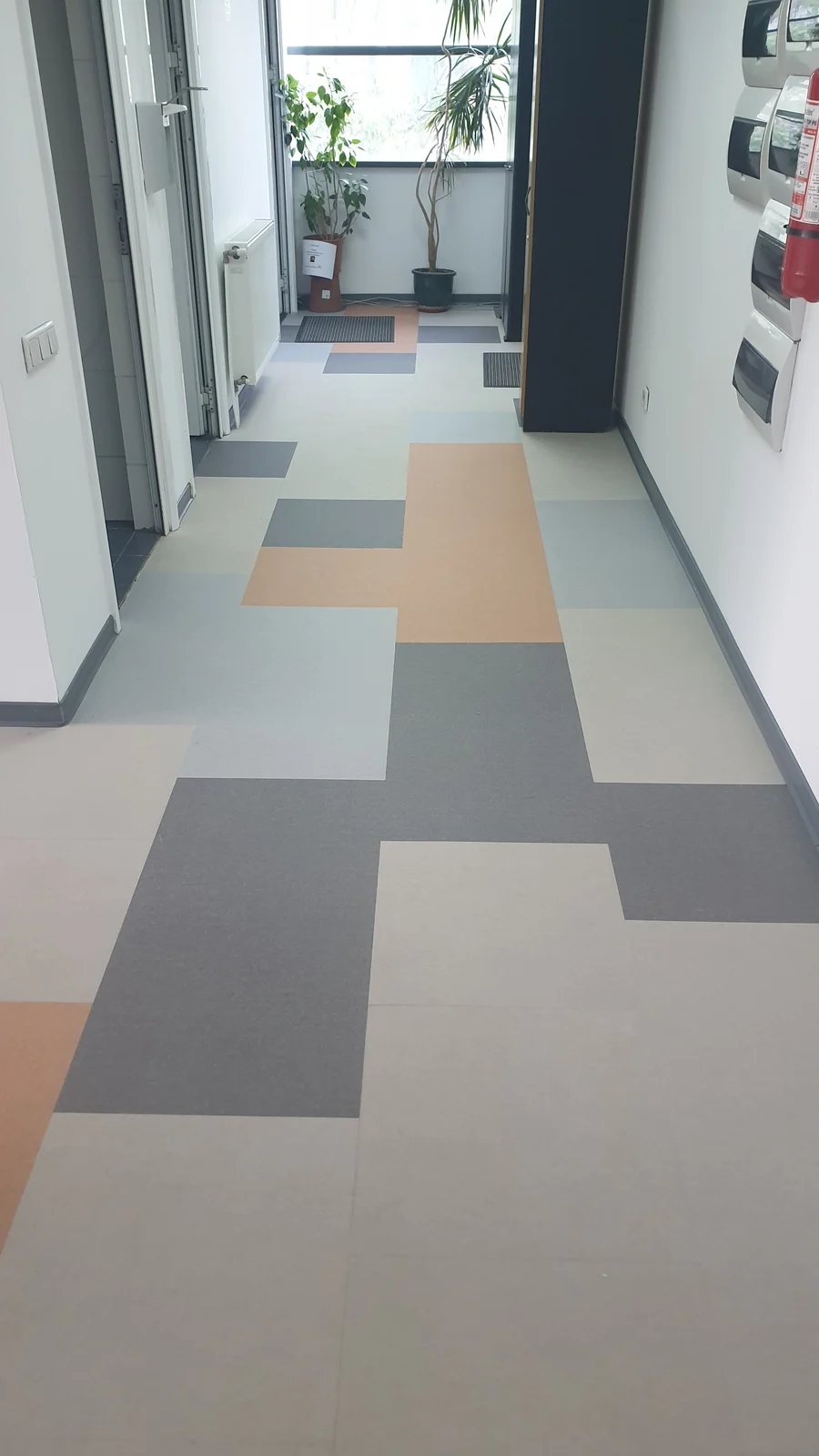
Start with the installation environment.
Compare the complete build-up.
Put both proposals against the same project brief.
Two samples can look almost identical and still represent different purchasing decisions. Before comparing an SPC proposal with dryback LVT, define how the floor will be installed and what the project needs from the completed system. A useful brief gives the factory enough context to propose the right construction without silently changing the requirement.
This guide offers a procurement workflow. Product examples illustrate the questions to ask; their installation limits do not apply automatically to another manufacturer’s floor.
Separate the material from the installation
Write two fields in the brief: product construction and installation method. In the comparison here, one proposal is a floating rigid-core floor with a mechanical joint; the other is dryback LVT bonded to the prepared substrate. Karndean’s commercial format guide distinguishes gluedown, loose lay and rigid core, describing its rigid-core format as a floating click floor. The word LVT alone therefore does not settle the installation method. Read Karndean’s format definitions.
Ask each supplier to return the same short schedule: construction, installation, dimensions, panel thickness, wear layer, surface treatment and backing. For a click product, add the joint system and the relevant installation document. Keep the factory’s original description alongside your normalized fields so that a vague term remains visible until clarified.
Bring the substrate into the conversation
Do not let a convenient product label replace a site brief. Record the existing substrate, any known unevenness, the intended rooms and who will assess the installation conditions. If those facts are unavailable, make them open questions with an owner and a date to resolve them.
Karndean’s UK gluedown instructions call for a prepared, dry, clean substrate and a compatible adhesive procedure. Its rigid-core instructions also require substrate preparation, specify limits on unevenness and address moisture measurement. These documents demonstrate why a floating construction is not permission to ignore the base beneath it. Use the instructions for the actual proposed product and market. Gluedown instructions, rigid-core instructions.
Compare the complete build-up
Keep finished panel thickness separate from any attached pad. Ask for a cross-section or a clearly labelled drawing when a quotation says only “5 mm flooring”. Your comparison should show whether that number includes the backing and how the supplier defines each layer.
For our product brief, panel thickness excludes the attached pad and already includes the wear layer. If a supplier uses another convention, preserve its original figures and clarify the conversion before comparing proposals. Do not count the wear layer twice.
Underlay deserves its own decision. MMFA recommends selecting the floor and underlay together for the intended application. Karndean’s cited rigid-core instructions, for example, do not normally recommend an additional separate underlay. Neither statement establishes which pad is suitable for an unrelated SPC product. Request the proposed system’s written compatibility requirements. MMFA underlay guidance, Karndean rigid-core instructions.
Ask how the room will be finished
Add a simple plan showing fixed furniture, doorways and transitions to other surfaces. Ask the supplier or installer to identify the edge details and movement provisions their installation system requires. Karndean’s rigid-core guide contains product-specific rules for expansion gaps and fixed objects; those rules should not be converted into a universal number for every click floor. Check the product-specific guidance.
For procurement, the useful output is an agreed detail, not an argument over which format is universally better. Include the trims, accessories and instructions required to deliver that detail, then assign responsibility for confirming them.
Compare proposals on two levels
Keep a product comparison and a project comparison. The first records what leaves the factory. The second records the work and materials needed to use it in the project. Ask for preparation, adhesive or underlay, accessories, installation and maintenance assumptions to be listed separately, even when you do not yet have costs for them.
A lower material quotation cannot answer a question about the whole project when the installation scope is different. Equally, a thicker product should not win automatically. The reason for choosing a proposal should be traceable to a requirement and supporting documentation.
Send a brief that invites a clear answer
Finish with three instructions: identify any missing information, state every proposed alternative, and supply the documents supporting the exact configuration. Ask suppliers to mark an unsupported requirement explicitly rather than tick every box.
Build a structured product brief and use the factory register to identify the capability questions for your shortlist. A sourcing decision becomes easier when each offer answers the same project, using the same definitions.
Sources & further reading
Authorship, affiliations & disclosure
AI-assisted editorial research prepared from the linked primary sources on 19 September 2026. No named technical reviewer or independent product testing is represented. No factory visit, product test or supplier endorsement is implied.
Corrections & editorial informationContinue exploring.
The reading room
Read the certificate, not the badge.
The company, product, site and dates behind a flooring certificate matter more than the logo on a supplier presentation.
Read the feature
A panel is more than its surface.
PVC wall panels begin with a sheet. A successful specification includes the substrate, joints, fixing method and intended application.
Read the feature
A similar surface is not the same design.
From an inspiring image to a supplier film reference: the checks between a visual match and something you can actually order.
Read the feature