
Decision guide / Country choice
China plus one flooring: stay in China, go to Vietnam or add Thailand
Stay in China, move to Vietnam or add Thailand: US duty exposure, origin risk, cost drivers and factory depth from 32 directory records, November 2026.
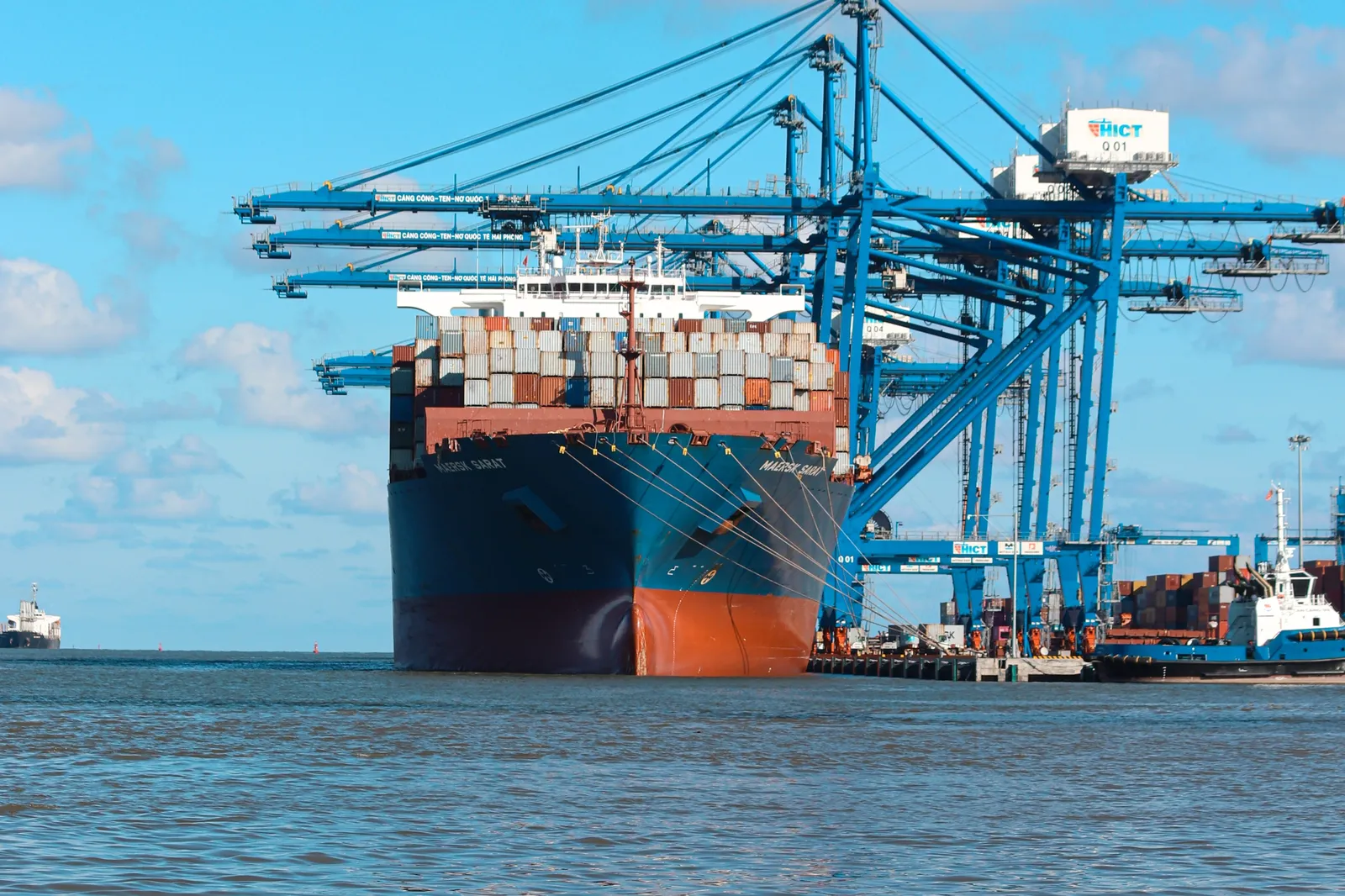
Short answer
Decide per range. For US-bound SPC, Chinese origin carries one more Section 301 duty than Vietnamese or Thai origin, so a move pays only if the floor is made, not just packed, in the new country. Vietnam has the deeper documented factory base and EU and UK trade agreements. Thailand suits a second source. China stays sensible where no plant elsewhere can document your construction.
In HTS Revision 23 (2026), China, Vietnam and Thailand all pay the same 12.5% Section 301 duty; only Chinese origin adds the 25% List 3 duty on HTS 3918.10.10.
Our directories hold 13 published Vietnam SPC records and 10 Thai production-lane SPC records, 7 of the Thai ones with a parent group based in China.
CBP ruling N323990 (2022) treated SPC with a Vietnamese-made core and Chinese surface layers as Vietnamese; a plant that buys in finished core board is outside that ruling.
Should you stay in China, move to Vietnam or add Thailand?
A US-bound SPC range that a Vietnamese plant already makes from its own extruded core is the clearest case to move. Thailand fits a second source for a range you already buy in volume. China stays sensible for non-US markets, small ranges and constructions no plant elsewhere can document.
China plus one is usually framed as a country choice. In practice it is a set of range decisions, not a company decision, each with its own duty exposure, origin evidence and qualification cost. A programme of eight SKUs can end up with five in Vietnam, two still in China and one double-sourced in Thailand.
The table frames the decision as we would. Duty points come from the US tariff schedule (HTS Revision 23, 2026); factory points come from our directory records.
| Option | Suits | Main risk | First check |
|---|---|---|---|
| Stay in China | Non-US markets; US ranges with low volume or a construction no alternative plant documents | The 25% List 3 duty stays on every US entry; supply sits in one country | Price the full US duty stack per range before deciding to stay |
| Move to Vietnam | US-bound volume ranges; EU and UK buyers who can use Vietnam’s trade agreements | An origin claim that rests on imported core board | Where the core is extruded for your exact construction |
| Add Thailand | A second source for an established range | Recent starts, output still ramping, concentration in China-based groups | Commissioned output at the plant that will run your order |
| Split across two countries | Large programmes where one failed plant would stop sales | Two qualifications, two specification files, stock that must not mix | Whether both plants can hold one specification |
For a pair-by-pair comparison of named plants on one specification, read our Vietnam against China supplier guide.
Where the choice is between the two Southeast Asian options, the Vietnam or Thailand comparison covers scale, ports, minimum orders and company records.
How much US duty exposure does each option carry?
For US-bound SPC under HTS 3918.10.10, China, Vietnam and Thailand all pay the same 12.5% Section 301 duty in HTS Revision 23 (2026). USTR imposed it in July 2026 on all products of 60 economies that, in its finding, do not impose and enforce a ban on forced-labour imports (91 FR 47318). Chinese origin adds the 25% List 3 duty on top. The gap between staying and moving is that one duty, and it follows origin, not the port of loading.
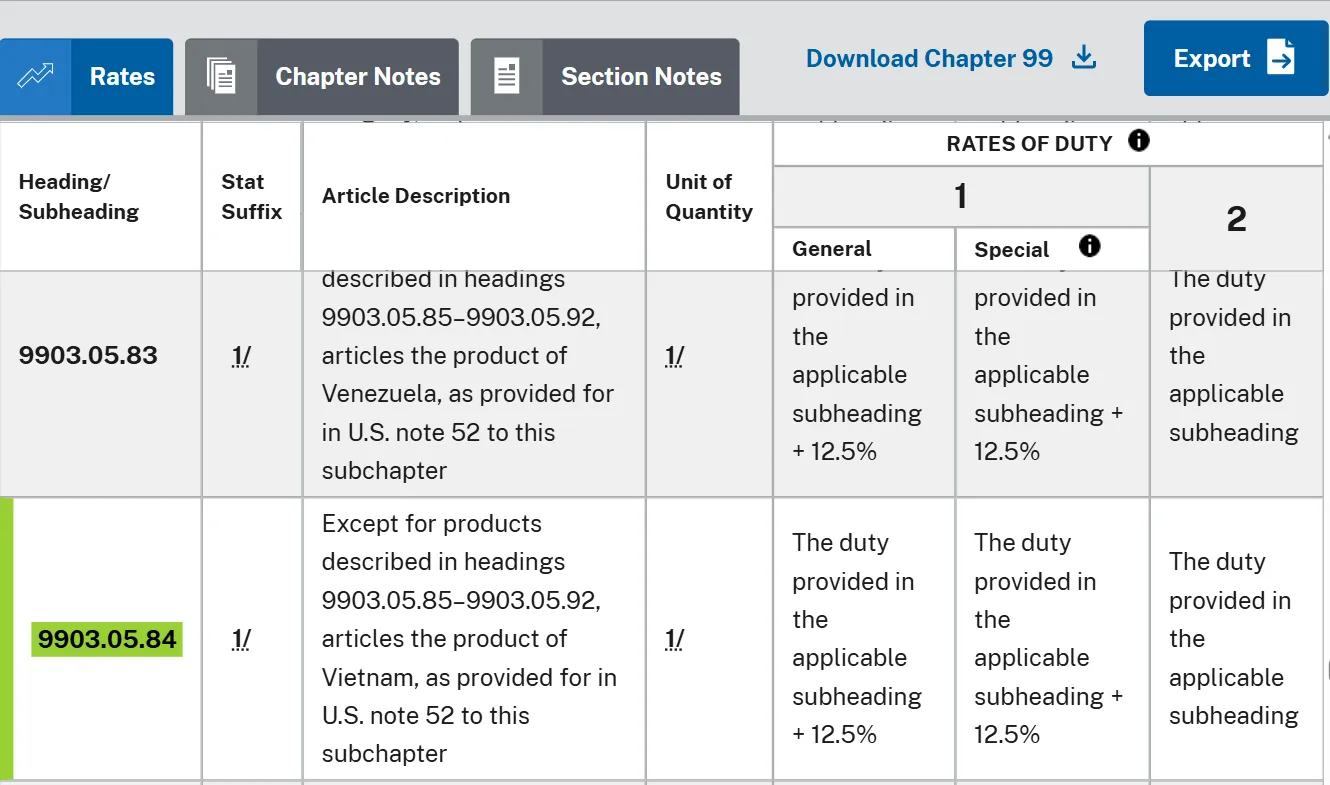
Rates move, and this guide does not track them. The dated US tariff monitor holds the full stack, the court challenge to the 12.5% and the contract clauses we would write.
What matters for the country decision is structure. Moving from China to Vietnam or Thailand removes the List 3 duty. It leaves the general rate and the 12.5% where they were, so Thailand is not a lower-duty Vietnam. Choose between those two on plant evidence, not on the US schedule.
For EU and UK buyers the question is a preference, not a penalty. Vietnam has trade agreements in force with the EU (since 1 August 2020) and the UK (since 1 January 2021). The EU’s talks with Thailand were relaunched in March 2023 and are still listed as under negotiation.
The table shows exposure by destination, from the US tariff schedule and European Commission and UK government pages read in November 2026.
| Destination | China origin | Vietnam origin | Thailand origin |
|---|---|---|---|
| United States | 12.5% Section 301 plus List 3 | 12.5% Section 301 | 12.5% Section 301 |
| European Union | No agreement covered here | Agreement in force since August 2020, subject to its origin rules | No agreement in force; talks relaunched March 2023 |
| United Kingdom | No agreement covered here | Agreement in force since January 2021, subject to its origin rules | Not covered here |
A preference applies only when the floor meets the agreement’s product-specific rule. A Vietnamese plant that laminates imported board may not qualify where one that extrudes its own core does. The broker confirms this per construction.
What makes a China plus one move fail at customs?
A move fails when the new country does the packing but not the making. US origin changes only through substantial transformation under 19 CFR 134.1(b). A Vietnamese or Thai plant that extrudes the core is on firm ground. One that laminates, profiles or relabels Chinese board is not, whatever its certificate of origin says.
The clearest public marker is CBP ruling N323990 of 22 February 2022: a Vietnamese-made core with Chinese surface and backing layers, origin Vietnam. It is one ruling on one process, and it does not cover a plant that buys in finished core board.
Transshipment risk sits in the Enforce and Protect Act (19 U.S.C. 1517). Evasion there means entering goods covered by an anti-dumping or countervailing order through a material false statement or omission. It applies only where such an order exists. If a case ever reaches SPC from China, entries from Vietnam and Thailand become the test.
Thailand checks from its side as well. Under a Department of Foreign Trade announcement in force from 1 January 2024 (amended October 2024), exporters of watch-list goods bound for the US and EU must have a cost verification approved before a non-preferential certificate of origin is issued; an approval runs for two years. DFT also lists a newer guideline from 1 June 2026; ask the exporter which procedure applies to your goods. Ask the Thai exporter whether its HS line is on the list and which procedure applies.
The evidence file we would build before the first order is in our origin-check workflow. Its four trails (factory, materials, production, shipment) apply to a Thai plant unchanged.
Which landed-cost drivers change when you move?
For US buyers duty is the visible change, not the only one. Packed quantity per container, freight lane, payment terms, inspection, qualification samples and the cost of running two specifications all shift with the country. Compare the drivers on one specification and one quote date.
The table lists what changes with a move and how we would check each driver. It is a working list, not a price model.
| Driver | What changes with the move | How to check |
|---|---|---|
| Duty and preference | List 3 duty into the US for Chinese origin; possible preference into the EU and UK for qualifying Vietnamese goods | Broker classification per construction, dated |
| Origin evidence | New records at the new plant; possible Thai prior verification | Ask for a sample evidence file before the order |
| Packed quantity | Board thickness, carton and pallet rules differ by plant | Same construction, the plant’s own packing list |
| Freight | New port of loading and transit | Forwarder quote on the same Incoterm and date |
| Qualification | Samples, décor matching, test reports, trial order | Budget as a project cost, not overhead |
| Dual running | Two specification files, two inspection plans, stock that must not mix | Decide stock identification before the first new carton |
A sheet that compares a Chinese quotation with a Vietnamese one and stops there misses most of this list. The qualification and dual-running rows are the ones a quotation comparison does not show, and they fall before the duty saving is fully in place.
How deep is the factory base in Vietnam and Thailand?
Vietnam is deeper for SPC buyers today. Our Vietnam directory holds 13 published SPC factory records. The Thailand directory holds 19 records, of which 10 are production-lane SPC plants, and seven of those 10 name a parent group based in China.
The table compares the two directories on the points that matter for a country move. Figures are from our own records: Vietnam reviewed in October 2026, Thailand on 31 October 2026.
| Measure | Vietnam | Thailand |
|---|---|---|
| Published factory records | 13 SPC records | 19 records, 10 production-lane SPC |
| Linked to a China-based group | 2 (1 confirmed, 1 probable); owners of 4 not confirmed | 7 of the 10 SPC plants |
| Groups present in both countries | Huali, Sentai | Huali (Estival, Rayong), Sentai (Chonburi) |
Start with the Vietnam factory directory for plant addresses, operating companies and the products each record lists.
Thai records also show spare room: Vytec’s Hong Kong listing application reports 17.9% utilisation of its 2025 capacity, and SCG COTTO’s second line is scheduled for Q2 2027. Spare capacity helps a second-source allocation; it also means stable output at volume is not yet shown. Read the Thailand factory records with that in mind.
A move to Thailand often means buying from the same Chinese group in a new country. That can make décor and specification transfer easier. It does not make the new plant pre-approved, and it does not spread risk across owners.
How long does a move take before the first repeat container?
Longer than the production lead time on the quote. A move adds sample rounds, décor matching, test reports, an origin evidence file and a trial order before repeat production. The time is set by how much of your construction the new plant already runs.
The main drivers, in the order we would check them:
- whether the plant already runs your core thickness, wear layer and click system;
- whether your décor film can come from the same printer, or needs rematching;
- which test reports must be reissued for the new plant and product;
- whether the plant is in ramp-up, as several Thai records show;
- how long your customers need to approve a new production source.
Keep China orders running until the new plant passes the trial and the evidence file holds. The cost of a short overlap is small next to a stock gap if the trial fails.
Worked example: splitting a US programme across two countries
A US importer buys one SPC range from a Chinese plant, 24 containers a year (illustrative). To keep the arithmetic clean, customs value per container is indexed at 100 (illustrative, not a price). The List 3 duty is 25% of customs value, so 25 index points per container of Chinese origin.
Year one moves 16 containers to a Vietnamese plant that extrudes its own core and keeps 8 in China while the trial runs. Year two moves the last 8 to a Thai plant as a second source.
| Line (illustrative) | Stay in China | Year 1: 16 Vietnam, 8 China | Year 2: 16 Vietnam, 8 Thailand |
|---|---|---|---|
| Containers carrying the List 3 duty | 24 | 8 | 0 |
| List 3 duty, index points | 600 | 200 | 0 |
| Containers carrying the 12.5% duty | 24 | 24 | 24 |
| Plants to qualify | 0 | 1 | 1 more |
| Origin files to maintain | China | Vietnam, China | Vietnam, Thailand |
On these figures the List 3 saving is 400 index points in year one and 600 in year two, the customs value of four and then six containers. The 12.5% does not move. The saving also depends on one condition: if the Vietnamese plant’s origin claim fails, its entries are reassessed as Chinese and the year-one gain turns into a liability.
Our view: what would we do?
We would move US-bound volume ranges first, to a Vietnamese plant that extrudes its own core and shows the records. China keeps running until the trial passes. Thailand comes next as a second source, not the first move: several Thai SPC plants in our records are recent starts, and stable output at volume is not yet shown.
For EU and UK buyers, Vietnam’s trade agreements make it the first place to test, provided the construction meets the origin rule. We would stay in China for ranges where no plant elsewhere documents the construction, and revisit them once a year.
We would not treat China plus one as a cost project alone. Its value is a second country that can hold the specification when the first one cannot ship. Our factory selection support runs the shortlist, samples and supplier meetings in Vietnam for buyers making that move.
Other factory research guides, including the ownership records and regional maps, sit under Find factories.
Common mistakes: where does a country move go wrong?
Most failed moves change the supplier’s address without changing where the floor is made. The rest underestimate the work of running two plants. The table lists the mistakes we would check for, what each costs and how to avoid it.
| Mistake | What it costs | How to avoid it |
|---|---|---|
| Moving the purchase order, not the manufacturing | Entries reassessed as Chinese origin, List 3 duty back on every container | Confirm where the core is extruded for your construction |
| Comparing countries on the quotation alone | Duty, packing, qualification and dual-running costs left out | Use the cost-driver list on one specification |
| Treating Thailand as a lower-duty Vietnam | A decision built on a duty gap the US schedule does not show | Choose between them on plant evidence |
| Assuming one group means one approval | New plant, new process, new test reports | Qualify each site on its own |
| Stopping China before the trial passes | A stock gap if the new plant misses the specification | Run both until the trial and evidence file pass |
| Using a rate sheet from before July 2026 | A duty stack that no longer applies | Date every rate and check the tariff monitor |
Questions buyers ask
Can I ask my Chinese supplier to ship from its plant in Vietnam or Thailand instead?
You can, but treat it as a new plant approval. Ask which construction runs there, whether the core is made on site and for that plant's own test reports. Ownership does not set origin, as our research on [who owns Vietnam's SPC factories](/intelligence/who-owns-vietnam-spc-factories/) shows.
What happens if a trade case is opened on SPC from China after I move?
Entries from Vietnam or Thailand made with Chinese inputs become the place where evasion is tested. Under the Enforce and Protect Act, CBP must decide within 300 calendar days of opening an investigation, or up to 360 if the case is complex. Keep the origin file for every shipment, not only the first one.
Does moving out of China remove the forced-labour risk?
No. The UFLPA presumption follows the inputs, mainly the PVC resin, wherever the floor is finished. A Thai or Vietnamese plant buying Chinese resin needs the same upstream file. Our [PVC traceability guide](/intelligence/uflpa-pvc-flooring/) sets out what to request.
Can the factory issue a Vietnamese or Thai certificate of origin for boards made in China?
A certificate does not change the origin rule. US origin follows where the floor was made or substantially transformed, and the importer carries the result. We would treat that offer as a reason to drop the supplier.
Should EU and UK buyers move for the same reasons as US buyers?
The reason differs. For US buyers the move removes the List 3 duty; for EU and UK buyers it can open a preference under the Vietnam agreements. Both depend on the floor meeting an origin rule, so the evidence work is the same.
Sources & further reading
- USITC Harmonized Tariff Schedule, Chapter 99, Revision 23 (2026): headings 9903.05.31, 9903.05.77, 9903.05.84, 9903.88.03; USTR notice 91 FR 47318 (28 July 2026)
- CBP ruling N323990 (22 February 2022): country of origin of SPC flooring produced in Vietnam
- 19 CFR 134.1(b): country of origin and substantial transformation, checked November 2026
- European Commission: EU trade relations with Vietnam and with Thailand, checked November 2026
- Thailand Department of Foreign Trade: Form C/O for watch-list goods to the US and EU (2023, amended 2024)
Authorship, affiliations & disclosure
Prepared from the primary sources listed and our own directory records, checked 10 November 2026. Duty references are dated; confirm classification and rates with a licensed customs broker before they go into a contract. The worked example uses illustrative figures, not prices. No factory visit, audit or test is reported.
Corrections & editorial informationContinue exploring.
All guides in Find factories
Vietnam vs China SPC flooring: what an importer should weigh
Vietnam supplied 46.1% of US vinyl flooring imports in 2025, China 14%. How duty, origin proof, supply depth and MOQ compare, from official data.
Read the feature
Who owns Vietnam's SPC flooring factories, and is your floor really made in Vietnam?
Vietnamese, Chinese or international? Graded ownership for published Vietnam SPC factory records, and why US origin depends on where the floor is made.
Read the feature
Buying SPC from AMY Grupo: which plant makes your order
AMY merged its SPC1 plant into SPC2 in 2023. What that means for quotations and test reports, and the documents to request before ordering SPC from AMY Grupo.
Read the feature