
Guide / Loading evidence
SPC container loading inspection photos: what to ask for
A 12-shot list for SPC loading photos, from empty box to seal, each tied to the bill of lading or packing list. Built on the IMO CTU Code.
Short answer
Ask for a fixed shot list, not "some photos". The set that holds up starts with the container number and safety plate on the empty box, then floor, walls and roof, then cartons with readable marks at each loading stage, and ends with closed doors and a legible seal number. A photo becomes evidence only when it matches the bill of lading, packing list and seal record.
Under the IMO/ILO/UNECE CTU Code the container number, verified gross mass and seal number belong on every transport document, bills of lading included.
The last character of an ISO 6346 container number is a check digit, so a mistyped number on the bill of lading can be caught from the door photo.
Loading photos prove which box was used and what went in on that day. They prove nothing about wear layer, core or click.
Which photos should you ask for at SPC container loading?
Ask for twelve shots in a fixed order: the empty box from outside and inside, the goods and their marks before loading, three stages of loading, then the closed doors and the seal. Send the list with the purchase order. A fixed list means a missing photo is visible, and a missing photo is a question.
The list below is ours. The container and seal checks behind it come from the IMO/ILO/UNECE CTU Code (2014); the pallet mark from ISPM 15.
| # | Shot | When | What it proves | What it cannot prove |
|---|---|---|---|---|
| 1 | Container number on the door end, all 11 characters sharp | Empty, doors open | Which box was used; the number passes the check digit | That this box was the one sealed (shots 11 and 12 close that) |
| 2 | CSC safety approval plate and next examination date or ACEP mark | Empty | The box is cleared for international traffic | Its condition on the day |
| 3 | Interior from the doors: floor, walls, roof | Before loading | Clean, dry, no debris, stains or protrusions | Pinholes in the roof |
| 4 | Light test from inside, doors closed | Before loading | No daylight through walls or roof | Condensation during the voyage |
| 5 | Floor close-ups and door gaskets | Before loading | No broken boards, wet patches or torn gaskets | Anything under the floor |
| 6 | Cartons on pallets, marks readable: decor, lot, carton number | Before loading | Marks match the packing list and the inspected lot | What is inside the cartons |
| 7 | ISPM 15 mark on wooden pallets, if used | Before loading | The mark is present and complete | That the treatment was done |
| 8 | First row at the nose, pallet labels visible | Loading starts | Stacking pattern and first pallet numbers | The count |
| 9 | Half full, pallet labels visible | Mid-loading | Count progress against the plan | Damage inside stretch-wrap |
| 10 | Last row before the doors close | Loading ends | Final count and a firm face at the doors | Weight |
| 11 | Doors closed, container number in the same frame | Sealed | The box that left is the box in shot 1 | Who holds the seal later |
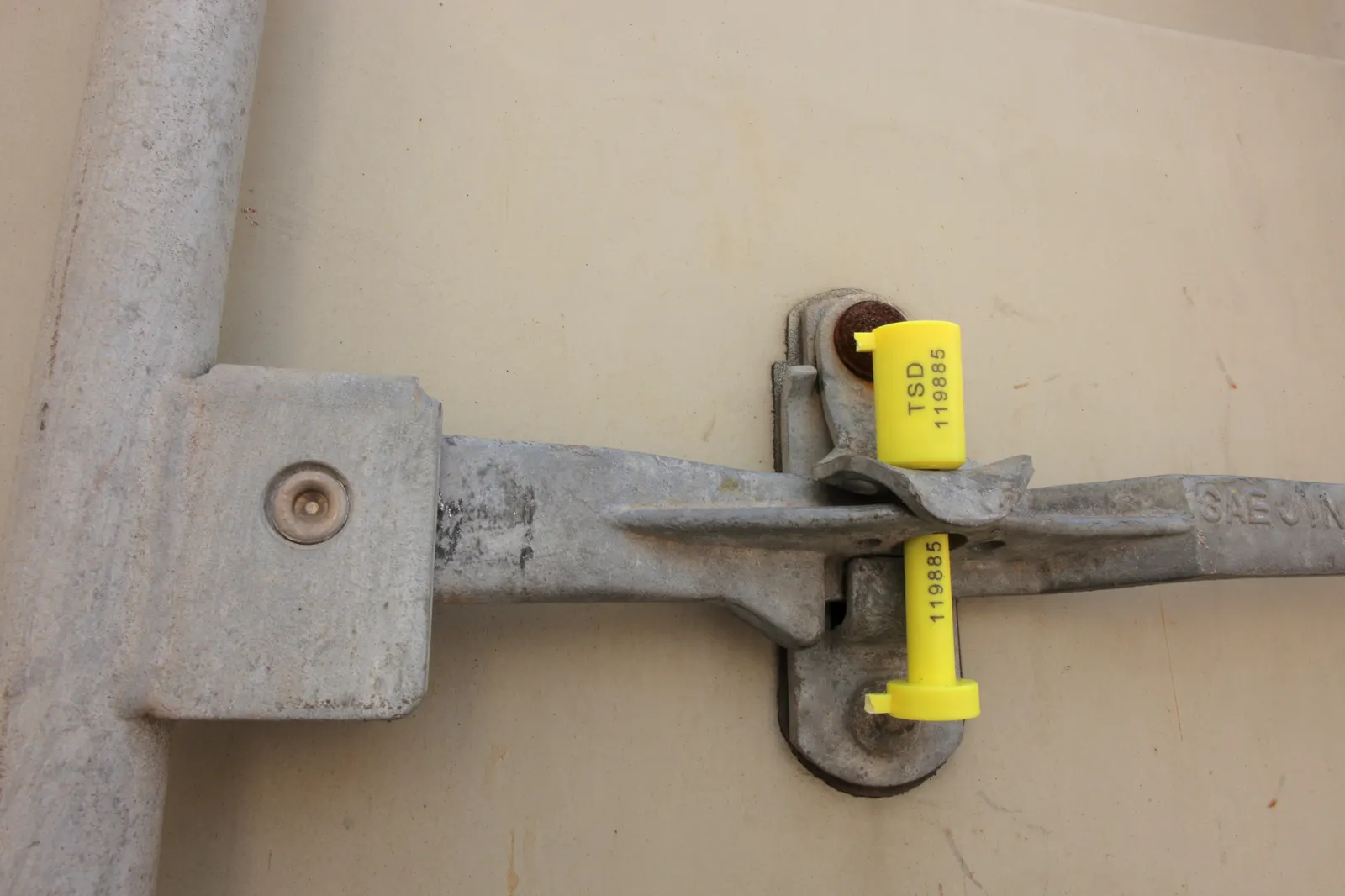
| 12 | Seal close-up, number legible, through the locking bar | Sealed | The seal number and that it is on this door | That the seal meets ISO 17712 |
What does the empty container have to show?
The empty box has to show three things: its identity, its approval and its condition. Identity is the container number on the doors. Approval is the CSC safety approval plate, usually on the left-hand door. Condition is a clean, dry, odour-free interior with a sound floor and no light coming through, photographed before the first pallet goes in.
The CTU Code is direct on each point. A container with no CSC plate should not be used in international traffic. The plate carries the next examination date (five years after manufacture, then at least every 30 months) or an ACEP mark for a continuous examination programme. If there is no ACEP mark and the date has passed, or falls before arrival, the box should not be used. A photo of the plate settles that in one look.
On condition, the Code asks for a closed unit that is “clean, dry and free of residue and/or persistent odours” from earlier cargo, with no broken flooring or protruding nails and bolts. Its test for stains is practical: if a stain transfers to a gloved hand, ask for another container. Leaks show as light inside a closed box. For SPC the odour line matters: cartons can take on the smell of earlier cargo, and the end customer notices it.
How do you check a container number from a photo?
Read all eleven characters from shot 1 and type them into the BIC check-digit calculator. The format is three letters for the owner, U for a freight container, six digits and one check digit. The check digit exists to catch numbers copied wrongly. If it fails, someone mistyped it: on the door, in the photo caption or in the documents.
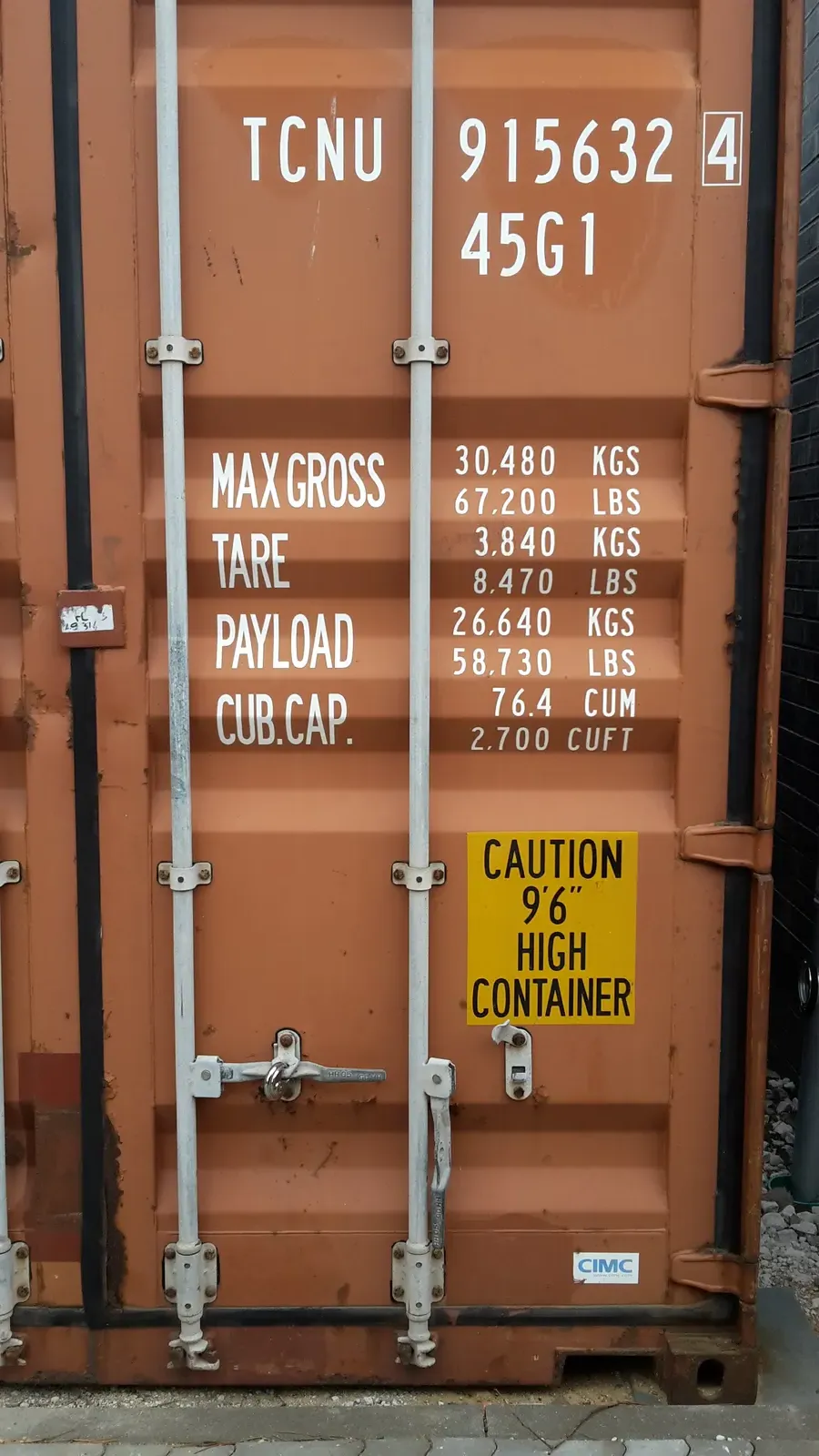
BIC was appointed by ISO in 1972 as the registry for owner codes, and ISO 6346:2022 is the current edition of the coding standard. In practice the check catches transposed digits in bookings and bill of lading drafts. Run it on the number in the photo and on every document, not once.
How do you tie the photos to the bill of lading and packing list?
Tie each photo to one document field. The container number and seal number must match the bill of lading, the packing list and the seal record. Carton marks must match the packing list line by line. The CTU Code expects the packer to pass the container number, verified gross mass and seal number to the shipper for every transport document.
| Data point | Photo | Document | What must match |
|---|---|---|---|
| Container number | 1, 11 | Bill of lading, packing list, VGM declaration | All 11 characters; check digit passes |
| Seal number | 12 | Bill of lading, seal record | Every character, including any prefix |
| Carton count | 6, 9, 10 | Packing list | Pallets seen in the photos × cartons per pallet |
| Decor and lot marks | 6 | Packing list, purchase order, inspection report | The lot that was inspected is the lot loaded |
| Gross mass | none | VGM declaration, bill of lading | Photos cannot show it; check the weighing record |
| Pallet treatment | 7 | ISPM 15 mark | Present only if solid wood pallets are used |
For an SPC order the line that fails most often is the carton marks. If the inspection report lists a lot and the pallets in shot 6 carry another, the photos have just shown you that the inspected goods are not the loaded goods. That is a reason to hold loading, not to note it for later. What the inspector checks on those cartons before this point belongs to our pre-shipment inspection checklist.
What should the seal photos show?
The seal photos should show one seal, its full number in focus, through the locking bar of a closed door, plus a frame with the container number. Under the CTU Code, when sealing is required, the box is sealed immediately after packing with a seal carrying a unique identification number, and countries may require seals to meet ISO 17712.
ISO 17712:2013 is the current edition; ISO last confirmed it in 2023. A photo cannot show that a seal meets it. If your destination or your customs programme requires it, ask the forwarder or seal supplier for the certificate and keep it with the shipment file.
The seal matters again at arrival. The CTU Code says a seal number that differs from the documents, or a damaged or missing seal, could mean the box was opened in transit. Your warehouse can only make that check if the number on the bill of lading is right and the photo is in their hands before the doors open.
Do pallets need an ISPM 15 photo?
Only if the pallets are solid wood. ISPM 15 covers wood packaging such as pallets and dunnage; packaging made wholly of processed wood, such as plywood or OSB, is exempt, as is wood 6 mm thick or less. Plastic pallets are outside it. If wood is used, photograph the mark on a pallet in each stack.
A complete mark has four parts inside a border: the IPPC symbol, the ISO two-letter country code, the producer or treatment provider code, and a treatment code (HT, DH, MB or SF). The mark must not be hand drawn and should sit, preferably, on two opposite sides. A photo proves the mark is there and complete; the treatment itself sits under the national plant protection organisation’s control, not yours. Dunnage and blocking timber count too, and are easy to forget in the last row.
What can loading photos not prove?
Loading photos cannot prove anything about the board: wear layer, core weight, click strength, colour between pallets. They show the outside of cartons on one day. Those checks belong to inspections before loading, and to the hold points you set during production. Treat a clean photo set as proof of custody, not of quality.
If the inspection found problems and the factory reworked or re-sorted part of the lot, the photos have one extra job: showing that the cartons going in are the re-inspected ones. How to decide on a lot that fails, and who pays for the second visit, is covered in what to do after a failed inspection.
Loading is the last of several checkpoints. Our guide to hold points during SPC production sets out the earlier ones and when each should release the order.
Worked example: two mismatches caught before the bill of lading
Illustrative figures throughout: one 20ft container, 21 pallets of 50 cartons, 1,050 cartons in three decors. The container number and seal number are invented for the example.
| Check | Photo shows | Document shows | Result |
|---|---|---|---|
| Container number | XYZU 123465 8 (shots 1 and 11) | Bill of lading draft: XYZU 123456 8 | Calculator: 123465 gives 8, 123456 gives 0. Draft is mistyped; correct it |
| Pallets loaded | Pallet labels 1 to 21 across shots 8 to 10 | Packing list: 21 pallets | Matches |
| Decor B lot | Lot B-07 on all decor B pallets in shot 6 | Inspection report: B-07 | Matches |
| Seal | Seal on right door, number legible, container number in shot 11 | Seal record matches; bill of lading draft has no seal number | Add the seal number before issue |
The buyer sends both corrections to the forwarder the same day and holds the balance payment until the revised draft matches the photos. The cost is one email. Left alone, the warehouse receives a box whose number and seal do not match the bill of lading, and the first conversation at destination is with the carrier rather than about the floor.
Our view
We would make the twelve-shot list part of the purchase order on every container, with the rule that the set arrives the same day and the balance waits for it. On a first order with a factory, or after any rework, we would have someone independent of the factory take the photos and stay until the seal is on.
The two shots we would never trade away are 11 and 12. Without the container number and the seal number in the same set, every other photo could be of any box. Where the rest of the evidence comes from, and what a buyer-side inspector does on loading day, is set out on our inspection service page.
Other guides on shipping, inspection and claims are collected under shipping and quality.
Common mistakes
| Mistake | What it costs | How to avoid it |
|---|---|---|
| Asking for “loading photos” without a list | The awkward shots are the ones missing | Send the twelve-shot list with the order |
| Photographing the seal without the container number | The seal could be on any box | Shot 11 next to shot 12, same door |
| Checking the container number only once | A typo in the bill of lading survives to arrival | Run the check digit on the photo and every document |
| Accepting marks too small to read | Lot and decor cannot be matched to the packing list | One close-up per decor before loading |
| Skipping the empty-box shots | No evidence if cartons arrive wet or tainted | Shots 2 to 5 before the first pallet |
| Treating clean photos as a quality pass | Hidden defects ship with a perfect photo set | Keep inspection and loading as separate evidence |
Questions buyers ask
Can I ask the factory to film the loading instead of taking photos?
Yes, and a continuous clip of the final rows and the sealing is harder to stage than stills. Ask for both: video for the sequence, stills for the numbers you need to read. A seal number in a moving frame is often unreadable.
What happens if the seal number on the bill of lading differs from the photo?
Stop before the bill of lading is issued and ask the forwarder which is right. If the photo shows the seal on this box with the container number in frame, correct the document. After arrival, a mismatch is a reason to call the carrier before the doors open.
Do photos need timestamps or location data?
They help, but metadata is easy to strip or change. The stronger proof is sequence: the container number repeated in the first and last shots, pallet labels visible as rows go in, and one unbroken set sent the same day.
Who should take the photos: the factory, the forwarder or an inspector?
Whoever is there for the whole loading and does not gain from a clean set. Factory photos are better than none; an inspector with no stake in the order is better, because the shot list then belongs to someone who can stop the loading.
What happens if the container arrives damaged or short?
Photograph the closed doors, seal and outside of the box before unloading, then each row as it comes out. Notify the carrier and your forwarder in writing at once. Your loading set is the baseline the claim is measured against.
Sources & further reading
- IMO/ILO/UNECE Code of Practice for Packing of Cargo Transport Units (CTU Code), MSC.1/Circ.1497, 2014
- BIC: container number structure and check digit (ISO 6346 owner code registry), checked November 2026
- ISO 17712:2013 Freight containers, mechanical seals (confirmed 2023)
- IPPC: ISPM 15, Regulation of wood packaging material in international trade (adopted 2018, published 2019)
Authorship, affiliations & disclosure
Prepared by our team from the standards listed, checked 10 November 2026. The worked example is illustrative. We offer loading supervision as part of our buyer-paid inspection service.
Corrections & editorial informationContinue exploring.
All guides in Shipping & qualitySPC bevel defects: names, causes and where to check
A painted SPC bevel is milled into the core, then lacquered. Name each bevel defect, tell it apart from a click fault and check it on assembled boards.
Read the guideSPC flooring defective container claim: evidence, notice and insurance
Transit damage goes to the carrier or insurer, factory defects to the seller. The evidence file, CISG notice rules and what CIF cover leaves out.
Read the guide
Failed SPC pre-shipment inspection: release, rework or reject?
Five options after a failed SPC pre-shipment inspection, a decision tree by defect class, and the PO clauses that decide who pays to re-inspect.
Read the guide