
Shipping & quality / After arrival
SPC flooring defective container claim: evidence, notice and insurance
Transit damage goes to the carrier or insurer, factory defects to the seller. The evidence file, CISG notice rules and what CIF cover leaves out.
Short answer
Stop using the affected stock, record the unloading and split the problem in two. Damage done in transit is a claim on the carrier and cargo insurer; a defect inside sound, sealed cartons is a claim on the factory. Send each party a written notice naming the defect with the affected runs and cartons as soon as you find it, and keep unopened cartons until the claim is settled.
Under CISG Article 40 a seller cannot rely on late or missing notice when the defect concerns facts it knew of, or could not have been unaware of, and did not disclose.
Under Incoterms 2020, unless otherwise agreed, a CIF seller must insure only to Institute Cargo Clauses (C) at 110% of the contract price, while CIP requires the wider Clauses (A).
Under the Hague and Hague-Visby Rules, damage that was not apparent at delivery should be notified to the carrier in writing within three days, and suit must be brought within one year of delivery.
This guide starts when the doors open at your warehouse. The decision before shipment, when a pre-shipment report fails, belongs to what to do after a failed inspection. Here the goods are yours, the balance is usually paid, and what you recover depends on what you record before the cartons are moved.
What should you do when a defective container arrives?
Freeze the lot before anyone fixes it. Check the container and seal against the documents before the seal is cut, film the unloading, note visible damage on the delivery receipt, and set the affected cartons aside unopened. Then decide who the problem belongs to: the carrier and insurer, the factory, or both.
The order matters because each step closes off evidence. The table sets out the first actions, who each one is for and what it protects.
| Action on arrival | For whom | What it protects |
|---|---|---|
| Container number, door and seal photographed before the seal is cut | Carrier, insurer | Proof the box arrived as shipped, or did not |
| Exterior damage to the container photographed and reported to the operator | Carrier | The transit cause, while it is still visible |
| Unloading filmed tier by tier, pallet labels readable | All parties | Where damaged cartons sat in the load |
| Written remarks on the delivery receipt for visible damage | Carrier | A clean receipt is read as sound delivery |
| Affected cartons kept unopened, by run and pallet | Factory | Proof the defect was in the box, not the installation |
| Claims contact on the insurance certificate called before damaged cargo is moved or discarded | Insurer | The insurer’s right to survey |
Is it transit damage or a manufacturing defect?
Look at where the damage sits. Crushed, wet or torn cartons, broken pallets and boards damaged only at carton corners point to handling or stowage. A defect repeated inside sound, sealed cartons of one run, such as delamination, curl, a short wear layer or a click profile that will not lock, was there when the goods left the factory.
The split decides who pays. Under the CISG, loss or damage after risk has passed does not release the buyer from paying the price unless the seller caused it (Article 66). Transit damage is therefore a claim against the carrier or your cargo policy. A defect present at the point of risk is the seller’s (Article 36), whichever leg it was found on.
Two cases sit between the two. Poor stowage inside the container is done by the factory’s loading crew, so it can look like transit damage and still be the seller’s problem. Moisture damage needs the container record: a hole in the box is the carrier’s, wet cartons in a sound, dry box may go back to packing.
What goes in the evidence file?
Everything a third party would need to rebuild what happened from factory to warehouse: the documents and photos that identify the goods and their condition, plus boards that were never installed. A claim on the factory is decided by the boards you can still send or show. A claim on the insurer is decided by the survey.
Build the file before the first email to the factory, so the notice can quote it:
- Bill of lading, packing list, commercial invoice and the insurance certificate or policy.
- Seal number on the documents and the seal photographed before cutting, kept with the cut seal.
- Unloading photos and video, with pallet labels and carton marks readable.
- Carton, pallet and production run numbers of every affected carton, and of the clean runs for contrast.
- Retained samples: unopened cartons from each affected run, plus opened boards labelled with carton number and date.
- The pre-shipment report, its photos and the golden sample it was checked against, with the checklist the inspector worked to.
- For installed goods: substrate, moisture readings, acclimatisation and the installer’s method.
When do you have to give notice?
Give written notice to each party as soon as you find the problem, and name the defect, the runs, the cartons and the photos that show it. The contract can set its own deadline, so read the PO and the warranty first. Where the CISG governs, a vague or late notice can cost the right to rely on the defect at all.
The table lists the time limits that apply to each party, from the sources that set them. The carrier rows apply where the bill of lading is subject to the Hague or Hague-Visby Rules; check which regime governs yours.
| Party | Notice | Source |
|---|---|---|
| Carrier, damage apparent at delivery | In writing, before or at the time the goods go into the receiver’s custody | Hague and Hague-Visby Rules, Article III rule 6 |
| Carrier, damage not apparent at delivery | In writing, within three days | Article III rule 6; without notice, removal of the goods is prima facie evidence of delivery as described in the bill of lading |
| Carrier, legal action | Suit within one year of delivery, or of the date the goods should have been delivered | Article III rule 6 (Hague-Visby wording) |
| Cargo insurer | As the policy conditions state | Your certificate or policy |
| Seller, under the CISG | Examine as soon as practicable; notice specifying the defect within a reasonable time after discovery; two years from handover at the outside | CISG Articles 38 and 39 |
| Seller, under your contract | As the PO or warranty states | Your contract |
Two points in the CISG text help the buyer. Where the contract involves carriage, examination may wait until the goods arrive (Article 38(2)), so the clock for examining starts at the destination. The notice itself has to specify the nature of the defect: “some boards are faulty” is weaker than a description by run and carton.
The CISG governs only some orders. It applies to a sale between parties whose places of business are in different States when both are Contracting States, or when private international law leads to the law of a Contracting State (Article 1(1)); Article 6 lets the parties exclude it. The UNCITRAL status table shows the Convention in force for Vietnam from 1 January 2017 and for the United States, China, Canada and Australia. Thailand and the United Kingdom are not listed. The United States and China declared that they are not bound by Article 1(1)(b), so the second route does not apply to them. Vietnam also declared that provisions allowing a contract, or its modification or termination, in a form other than writing do not apply where a party is in Vietnam, so put any settlement in a signed document.
What does a factory warranty usually leave out?
This section is our view, not a survey of warranty wording. A factory warranty on SPC is a promise from the seller, with its own scope, remedy and claim procedure. Read it for four things before the order: who it covers, what the remedy is, what it excludes and how a claim must be made.
- Who it covers. In our reading, a warranty to the importer is a contract term; one written for the end user may not give you anything against the factory.
- Remedy. Replacement boards only, or also freight, duty and the labour to lift and relay a floor. Boards-only cover leaves lifting and relaying an installed floor to you, a cost that belongs in the claims allowance of your landed cost.
- Exclusions. Installation, substrate moisture, heat and sunlight are the grounds a factory may invoke to refuse a claim. Ask for the installation conditions in writing so you can show they were met.
- Claim procedure. Notice period, photos, samples and whether the factory may inspect. A procedure you cannot meet from abroad is a warranty in name only.
A warranty with a defined period can also extend the CISG’s two-year outer limit, because Article 39(2) yields to a contractual period of guarantee. Production records matter here too: if your production hold points recorded runs and materials, a defect can be traced to a run, and the factory cannot answer that the boards are not its own.
Does cargo insurance pay for defective SPC?
For transit damage, often yes; for a manufacturing defect, no. Cargo cover pays for physical loss or damage in transit within the policy terms. A defect present when the boards left the factory is not loss caused in transit, and the Institute Cargo Clauses exclude packing failures that happened before the cover attached.
The clauses differ by letter. Clauses (A) cover all risks of loss or damage except what clauses 4 to 7 exclude. Clauses (B) and (C) cover only the perils they list, such as fire, stranding or overturning of the conveyance and, under (B) alone, entry of water into the container.
Two exclusions in the 2009 clauses matter for SPC. Clause 4.3 excludes loss caused by insufficient or unsuitable packing where the packing was done by the assured or its employees, or before the insurance attached; it counts stowage in a container as packing and does not treat independent contractors as employees. Clause 4.4 excludes loss caused by inherent vice or the nature of the goods. Whether a badly stowed container loaded at the factory falls under 4.3 therefore depends on when your cover attaches and on the policy wording.
The Incoterm decides who bought the policy. On CIF the seller insures from the point of delivery to at least the named port of destination, and the buyer is entitled to claim directly from the insurer, so ask for the certificate before the balance. On FOB the seller has no obligation to insure; the cover is whatever you buy, and it should run to your warehouse.
How does a split claim work? A worked example
Illustrative figures only, not market data. An importer receives one 40ft container on FOB terms: 1,600 cartons from four production runs, insured under its own Clauses (A) policy. The pre-shipment inspection passed. At the door the seal matches the bill of lading, but two pallets behind the doors have shifted and 48 cartons are crushed.
The crushed cartons are photographed in place, noted on the delivery receipt and reported to the carrier and insurer the same day. The insurer’s surveyor finds the pallets were not braced at the doors. The importer’s policy attaches when the goods are loaded on board, after the factory stowed the container, so the insurer declines under the packing exclusion and the 48 cartons join the claim on the seller.
Receiving checks then open 20 cartons from each run. Run 3, 400 cartons, shows edge delamination in boards from 6 of the 20 opened. The importer stops selling run 3, keeps 10 unopened cartons, and sends the factory a written notice that names the defect, the run, the carton numbers and the photos, and offers a joint inspection.
The factory proposes replacement boards on the next order. The importer signs only an amendment that covers all of run 3, the 48 crushed cartons, freight and duty on the replacements, and an inspection of the replacement boards before loading. Run 3 is sorted at destination meanwhile, because six failures in a sample of 20 do not tell the importer how many boards in the run are bad.
Our view
Much of a defective-container claim is decided before the container leaves. The PO sets the notice period, the remedy and who pays for inspection at destination; the pre-shipment report and loading record prove what was shipped; the balance, if you still hold part of it, is the lever. We would settle those terms with the order, with the balance tied to the inspection result.
At arrival we would treat the claim as two claims from the first hour, keep unopened cartons until both are closed, and give notice in writing on the day the defect is confirmed. A pre-shipment inspection against a written brief gives the arrival check a baseline to measure against.
Common mistakes with defective container claims
A claim is easiest to lose in the first days, through a clean delivery receipt or evidence that was installed before anyone looked at it. The table lists the mistakes we would check for, what each costs and how to avoid it; the stages before arrival are in our shipping and quality guides.
| Mistake | What it costs | How to avoid it |
|---|---|---|
| Signing the delivery receipt clean with damage visible | The carrier treats the goods as delivered sound | Write the damage on the receipt before signing |
| Cutting the seal before photographing it | No proof the box was not opened in transit | Seal photo with container number, then cut |
| Sending the factory photos without carton or run numbers | The factory cannot trace the boards and disputes they are its own | Notice names run, pallet and carton for every photo |
| Installing or selling the rest of the affected run | Remaining evidence is gone; installer fault becomes the factory’s answer | Quarantine the run until the claim is settled |
| Claiming a factory defect on the cargo policy | Delay while the insurer declines; notice to the seller goes late | Split the claim on day one |
| Accepting “replacement next order” by message | Scope, freight and quantity stay open | Signed amendment listing what is settled |
Questions buyers ask
Can I sell or scrap the defective stock while the claim runs?
Not before the factory and, for transit damage, the insurer have inspected it or agreed in writing that you may. Disposing of the goods removes the evidence the other side would examine. If storage costs mount, offer a joint inspection by a date and say in writing what you will do after it.
What happens if the floor is already installed when the defect shows?
Stop further installs from the same runs and keep unopened cartons from them. Record the substrate, moisture readings, acclimatisation and installation method of the affected job, because the factory will ask. A defect in unopened cartons from the same run is the strongest proof that installation did not cause it.
Can I ask the factory to pay for an inspection at destination?
You can ask, and some will agree when the evidence is strong. It is easier to agree in the purchase order: a joint or third-party inspection at destination, paid by the seller if the defect is confirmed. Without that clause the cost is a point to negotiate in the settlement.
Who pays to ship replacement boards?
Whatever the contract or warranty says, which is often nothing. If the remedy is replacement on the next order, write into the settlement who pays freight, duty and handling for the replacement quantity, and that the replacement boards are inspected like a new order.
What if the factory says the defect was caused by my installer?
Ask it to name the installation fault and the evidence for it, in writing. Then answer with unopened cartons from the same run, the pre-shipment report and the installation record. Disputes about cause are why the evidence file needs boards that were never installed.
Sources & further reading
- UNCITRAL: United Nations Convention on Contracts for the International Sale of Goods (CISG), official text, articles 1, 36, 38, 39, 40 and 66
- UNCITRAL: CISG status table, Viet Nam accession and declaration (read November 2026)
- ICC: Incoterms 2020, rules for sea and inland waterway transport (CIF and FOB A5) and rules for any mode of transport (CIP A5)
- TT Club: Institute Cargo Clauses (A), (B) and (C), CL382 to CL384, 1/1/09 (LMA/IUA wording), clauses 1 and 4
- UK Supreme Court: Fimbank Plc v KCH Shipping Co Ltd [2024] UKSC 38, quoting the Hague and Hague-Visby Rules, Article III rule 6
Authorship, affiliations & disclosure
Prepared from the UNCITRAL, ICC, TT Club and UK Supreme Court sources listed, read on 11 November 2026. The Institute Cargo Clauses are read as published by TT Club from the LMA/IUA wording; your policy wording governs. Factory warranty wording varies by supplier and was not surveyed; the warranty section is our view. The worked example is illustrative. This is purchasing guidance, not legal advice; take advice under the law and policy that govern your order.
Corrections & editorial informationContinue exploring.
All guides in Shipping & qualitySPC bevel defects: names, causes and where to check
A painted SPC bevel is milled into the core, then lacquered. Name each bevel defect, tell it apart from a click fault and check it on assembled boards.
Read the guide
Failed SPC pre-shipment inspection: release, rework or reject?
Five options after a failed SPC pre-shipment inspection, a decision tree by defect class, and the PO clauses that decide who pays to re-inspect.
Read the guide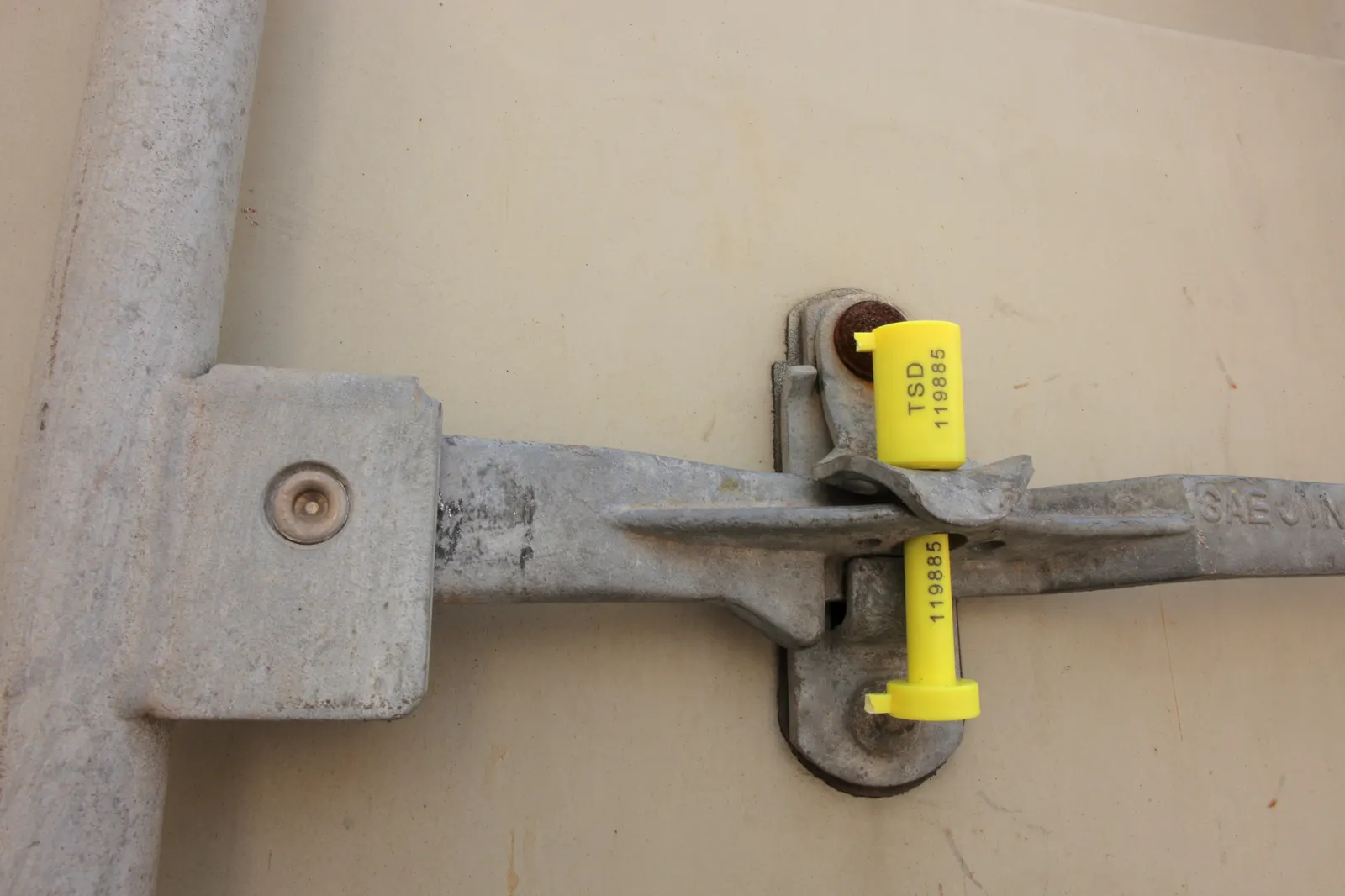
SPC container loading inspection photos: what to ask for
A 12-shot list for SPC loading photos, from empty box to seal, each tied to the bill of lading or packing list. Built on the IMO CTU Code.
Read the guide