
Find factories / Thai purchase order
Thailand SPC purchase order checklist: what to fix before the deposit
A clause-by-clause PO checklist for Thai SPC plants: seller and site, certificate scope, test editions, packing, release and export data. November 2026.
Short answer
Write the purchase order so every later document can be checked against it: the contracting company and producing site, the product by specification revision and certificate number, test methods with editions, pallet and carton marks, a written release after independent inspection, the balance trigger, a named-port Incoterm, governing law and the documents the plant sends. Sign it before the deposit.
Thai Customs routes full-container exports through a risk-profiling system: green-line shipments go to the vessel, red-line shipments pass an X-ray station first (Thai Customs, November 2026).
Thailand is not among the 97 parties to the UN Sales Convention (CISG) as of November 2026, so an order with a Thai plant needs its own governing-law clause, and the law you choose decides whether the Convention reaches the contract.
One Thai plant holds separate FloorScore numbers for PVC flooring and for laminate. The order should quote the number whose scope covers your product.
The quote has been compared and the Thai plant has passed qualification. What remains is the document every later dispute will be read against. This checklist covers the clauses we would sign before the deposit with a Thai SPC plant; the country decision itself is in our Vietnam and Thailand head-to-head.
What should a purchase order to a Thai SPC plant cover?
Ten blocks, each one tied to a document you will check later: parties and site, product, certificates, tests, packing and marks, inspection and release, payment, delivery, documents, and law and changes. A clause with nothing to check it against is a wish. A clause with a named document becomes a release condition.
The table lists each block, what we write into it and the later document it is checked against. It is our method, built from the official sources in this guide and Thai factory documents.
| Block | What to write | Checked against |
|---|---|---|
| Parties and site | Seller’s legal name and registration number; producing site address | Pro forma, invoice, certificate holder |
| Product | Specification revision, SKU and décor codes, approved sample reference | Inspection brief, carton labels |
| Certificates | Programme, number, holder, site, scope limit, validity dates | Issuer listing on order date and ship date |
| Tests | Property, method with edition, laboratory, sample source, who pays | Reports tied to run IDs |
| Packing and marks | Planks per carton, cartons per pallet, pallet material, mark artwork | Packing list, loading photos |
| Inspection and release | Inspector, sampling plan with edition, written release notice | Inspection report, release notice |
| Payment | Deposit, balance trigger, receiving account name | Bank details on file |
| Delivery | Incoterms 2020 rule, named port, latest shipment date, partial shipments | Booking, bill of lading |
| Documents | Which documents, in what form, by when | Document set before the balance |
| Law and changes | Governing law, forum, controlling language, change approval | Signed amendments |
The product block rests on a specification you already own. If it is still a sample and a few emails, build it first with our sample-to-specification method; a PO cannot hold a product that is not written down.
How do you name the seller, the site and the certificate?
Name three things that Thai paperwork can keep apart: the company that invoices, the site that makes your floor, and the certificate that covers that product at that site. Write all three into the PO, with the certificate number and its scope line, and make any change to any of them subject to your written approval.
Quotes can arrive from a sales office or trading arm; certificates are issued to a named holder at a named address. If the two differ, the PO should say which company sells, which site produces, and that the certificate holder’s site is the producing site. To see how these names line up plant by plant, compare Thai factory records.
Thai certificates show why the number alone is not enough. The table sets out four of them, as reviewed on 31 October 2026 (Nature’s renewal was read on 4 November), and what each means for the order.
| Plant and certificate | What the certificate says | What the PO should carry |
|---|---|---|
| Ansen, FloorScore SCS-FS-07903 | SPC to 8.0 mm; valid 1 Jun 2026 to 31 May 2027; Sri Racha site | Your total thickness, inside the limit |
| Omega, FloorScore SCS-FS-20117 | 2026 version: SPC with pad to 10.0 mm, Bo Thong site; the 2025 version named a Phanat Nikhom address | The site on the current version |
| Nature, FloorScore SCS-FS-20432 | 2025 version ended 31 Oct 2026; renewal valid 1 Nov 2026 to 31 Oct 2027, issuer listing not yet rechecked | Validity across the ship date, renewal attached |
| Dalai, FloorScore SCS-FS-20384 and 20385 | 20384: PVC flooring to 7 mm, 8.5 mm with pad; 20385: laminate and melamine-top engineered | The vinyl number, matched to your SKU |
Two of these turn into PO wording. Omega has used the same certificate number with different addresses in successive versions, so the PO should quote the site from the version current at signing.
Dalai holds a vinyl certificate that describes the product as PVC flooring, not SPC; match your SKU to that scope line before the number goes into the order.
Which test standards and editions should the PO name?
Name the method and its edition for every property you will test, plus the laboratory, who draws the samples and who pays. Standards move: ASTM F3261 is now in its 2026 edition, ISO 24334 has been marked for revision since March 2026, and ISO 2859-1 has a 2026 third edition. An undated reference lets either side pick the version that suits it.
The table below covers the references we would expect in a Thai SPC order. Your market or customer may add its own; the rule of naming the edition applies to those too.
| Property or step | Reference to name | When | Evidence required |
|---|---|---|---|
| Product specification | ASTM F3261-26, or your market’s equivalent, with your tolerances | Sample approval, then per order | Laboratory report naming the edition |
| Joint locking strength | ISO 24334:2019 (edition 3; titled for laminate floor coverings, so confirm it is the method your product standard calls up) | Sample, and after any tooling change | Report tied to run IDs |
| Final inspection sampling | ISO 2859-1:2026, inspection level and AQL per defect class | Pre-shipment | Inspection report stating the plan |
| Emissions certificate | Programme and number from the certificate table above | Order date and ship date | Issuer listing printout, dated |
If a new edition appears mid-programme, the PO should say whether reports to the older edition still count. For joint tests that is a live question: ISO lists a committee draft of ISO 24334 under development. We would keep the edition fixed for the life of the order and change it only by amendment.
Write who pays for a retest after a failure, and that samples are drawn from production by your inspector or the laboratory, not handed over by the plant.
What packing and marking terms belong in the PO?
Specify the pallet material, planks per carton, cartons per pallet, carton print, label fields and the shipping marks, as an annex with artwork. Under FOB the seller packages and marks the goods in a manner appropriate for transport; without your annex, the plant decides what that means.
Pallet material carries its own rule. ISPM 15 covers wood packaging made from raw wood, dunnage included, and excludes wood processed so that it is pest-free, such as plywood. If the plant uses raw-wood pallets or dunnage, the PO should require them treated and marked to ISPM 15, and say so on the packing annex. If it uses plywood or plastic pallets, state that, since a change later alters weight and loading.
The same marks and weights reach the Thai declaration. Thai Customs’ list of common clearance errors names the description of goods, shipping marks, quantity and weight, and its remedy for inconsistent declaration and shipping data is to reconcile all shipment data before the declaration is submitted. A PO that fixes the marks and label fields gives the plant one version to put on the cartons, the packing list and the declaration.
For carton labels, we would require SKU, décor code, production run or lot number, planks and square metres per carton, and carton number within the order. The run number is what ties a carton found in a warehouse back to a production record.
How should inspection and release be written?
Name who inspects, against which brief and sampling plan, and state that nothing is loaded until you have issued a written release. Add hold points before the final inspection: material release, first production boards and the first packed pallet. Each sign-off should be a document with board and run IDs, not a message in a chat.
The inspection itself, what to check and how many cartons to open, is set out in our pre-shipment inspection checklist. The PO only needs to make that checklist binding: the brief as an annex, the plan with its edition, the defect classes, and the rule that a failed inspection stops loading until a passing re-inspection or a concession you have signed.
Put the inspector’s access in writing too: the right to enter the plant and the warehouse on short notice, to draw cartons at random and to keep retained samples. If you book an independent pre-shipment inspection team, name the company in the PO so the plant cannot refuse it later.
The diagram shows where the release sits in the order, and where the Thai export steps follow it.
Which payment, delivery and document terms fit a Thai order?
Tie the balance to evidence, name the Incoterm with its port, make the plant responsible for the Thai export declaration, list the documents it must send, and choose the governing law. Each of these is short to write and expensive to argue about after loading.
Payment. The deposit and balance belong in the PO with the receiving account in the seller’s legal name and the evidence that releases each payment. Our guide to deposits and balance release sets out the splits and the bank-detail checks; for a Thai plant, the account name should match the seller named in the parties block.
Delivery. Write the rule and the place, for example FOB Laem Chabang, Incoterms 2020. Thai Customs names Laem Chabang and Bangkok Port as examples of the country’s major seaport gateways, so state which one, and the terminal if it matters to your forwarder. ICC’s guidance note says FOB is not appropriate where goods are handed to the carrier before they are on board, for example at a container terminal, and points to FCA; for containers, decide between the two rather than defaulting to FOB. Under FOB the seller delivers on board the vessel you nominate and, where applicable, carries out and pays for export clearance. Add the latest shipment date, whether partial shipments are allowed, and what happens if the date is missed.
Thai export data. Thai clearance runs on a paperless system: the exporter sends export declaration data electronically and the freight forwarder submits loading control data. Under FOB export clearance is the plant’s task. We would write three things: the declaration is filed only after your release and after the invoice and packing list are agreed; its goods description, quantity and weight match the commercial documents; and the plant sends the declaration number once customs releases the goods.
Documents. Thai Customs lists the invoice, bill of lading, packing list and any permit among the documents to prepare before clearance. The PO should add what you need on your side: the inspection report, the release notice, current certificate copies, test reports for the order, and loading photos with container and seal numbers. Set a deadline for each, and make the complete set a condition of the balance.
Law. Do not rely on the CISG to fill gaps in a Thai contract. If you choose the law of a CISG state, the Convention can apply through that choice unless the clause excludes it; say which you intend. Name the governing law, the forum or arbitration seat, and which language controls. State that changes to the PO bind only when both sides sign an amendment.
How does the checklist work on one order? A worked example
Illustrative figures only, not market data. A European distributor orders one SPC construction in two décors from a Thai plant: 1,560 cartons on 26 pallets of 60, FOB Laem Chabang. The quote came from the plant’s Bangkok sales company; the certificate is held by the plant’s own company at the factory address.
The PO names the sales company as seller, the plant as producing site, and the certificate number with its scope line; the order’s total thickness sits inside the SPC-with-pad limit. The annexes hold the specification revision, the inspection brief with ISO 2859-1:2026 named, plywood pallets, the carton artwork and label fields. A document clause says the invoice, packing list and marks are agreed before the export declaration is filed.
The inspection passes. During loading one pallet is held back with crushed corners, and the draft packing list drops to 1,500 cartons while the draft invoice still shows 1,560. Because the PO requires the documents agreed before filing, the mismatch is caught at the buyer’s desk, not in the declaration. The plant reissues the invoice for 1,500 cartons; both sides sign an amendment moving the 60 cartons to the next order.
The plant files the declaration with matching data, sends the declaration number on release, and the bill of lading follows with the rest of the document set. The balance is paid on the corrected invoice, against the PASS report and the complete document set.
Our view
A Thai PO should be written for the plant you have qualified, not copied from a Vietnam or China template. The difference is in the identity and certificate blocks: Thai companies often list sales offices apart from factories, and certificate versions change addresses and scope lines. We would fix seller, site and certificate scope first, then the rest.
The other half is documents. Thai export clearance is electronic and data-driven, so a mismatch between invoice, packing list and marks is a delay at the port, not a typo. We would never let the plant file before the documents are agreed. If you want help applying this to a specific plant, see our Thailand purchasing support.
The other factory-research guides are in the Find factories subject.
Common mistakes on Thai SPC purchase orders
Most of the costly ones come from leaving a block to the plant’s standard terms: the seller, the pallet, the plan edition, the law. The table lists what we check for, what each costs the buyer and how to avoid it.
| Mistake | What it costs | How to avoid it |
|---|---|---|
| PO to the sales company, certificate held by another entity, no site named | Production can move; a claim names the wrong company | Name seller, producing site and certificate holder; tie changes to written approval |
| Certificate number quoted without its scope line | Your thickness or construction sits outside the listed limit | Compare total thickness and construction to the scope, by version |
| “AQL 2.5” with no plan, level or edition | Inspector and plant argue about the plan after the report | ISO 2859-1:2026, inspection level, AQL per defect class |
| Packing and marks left to the plant | Pallets and labels you did not choose; data that does not match the declaration | Packing annex with pallet material, artwork and label fields |
| Plant files the declaration before the documents are agreed | Quantity or weight on the declaration differs from the invoice | Filing only after release and document approval |
| Incoterm without a named port | Unclear where delivery and risk pass | FOB with the named port, Incoterms 2020 |
| No governing-law clause | A dispute starts with an argument about which law applies | Name law, forum and controlling language |
Questions buyers ask
Can the PO name the plant’s Bangkok sales company as the seller?
Yes, if that is the company you pay and the one you would claim against. Then name the producing plant as the site, state that production may not move without your written approval, and ask the certificate holder to confirm in writing that your construction falls within its scope.
What happens if the plant wants to change the pallets halfway through a programme?
Treat it as a change under the PO change clause. A move to raw-wood pallets brings treatment and marking into play; a move away from them changes pallet weight and loading. Approve it in writing, with a revised packing annex, before the next loading.
Who carries the cost if the export declaration is wrong and the container misses the vessel?
Under FOB the plant handles export clearance, so a declaration error is on its side, but only if the PO says what follows. Write that rebooking and storage caused by seller-side document errors are for the seller’s account, and ask for the declaration number on the day of release.
Should the purchase order be in Thai as well as English?
If the plant asks for a Thai version, agree which language controls when the two differ, and keep the technical annexes in one language only. Have someone who reads both check the specification and packing annex before signing; translation errors there reach the production line.
Can I ask the factory to name its film and resin suppliers in the PO?
You can ask. The plant may decline to name them, but the clause that matters works either way: any change of resin, wear-layer film or décor film supplier for your order needs your written approval and a new sample before it reaches production.
Sources & further reading
- Thai Customs Department: Customs Procedures, BOI online seminar “Taxation and Customs in Thailand”, 5 November 2026
- UNCITRAL: CISG status table, 97 parties, and Convention text, Articles 1 and 6 (read November 2026)
- ICC: Incoterms 2020, rules for sea and inland waterway transport (FOB A2, A7, A8)
- ISO 2859-1:2026, Sampling schemes indexed by acceptance quality limit (AQL), Edition 3, January 2026
- ASTM F3261-26, Standard Specification for Resilient Flooring in Modular Format with Rigid Polymeric Core
Authorship, affiliations & disclosure
Prepared from Thai factory documents (reviewed 31 October 2026; one certificate renewal read 4 November 2026) and the official sources listed, read on 11 November 2026, including the CISG text (Articles 1 and 6) and the ICC guidance note to FOB. Origin documents and origin marking are outside this checklist. The worked example is illustrative. This is purchasing guidance, not legal advice; have contract wording reviewed under the law that governs your order.
Corrections & editorial informationContinue exploring.
All guides in Find factories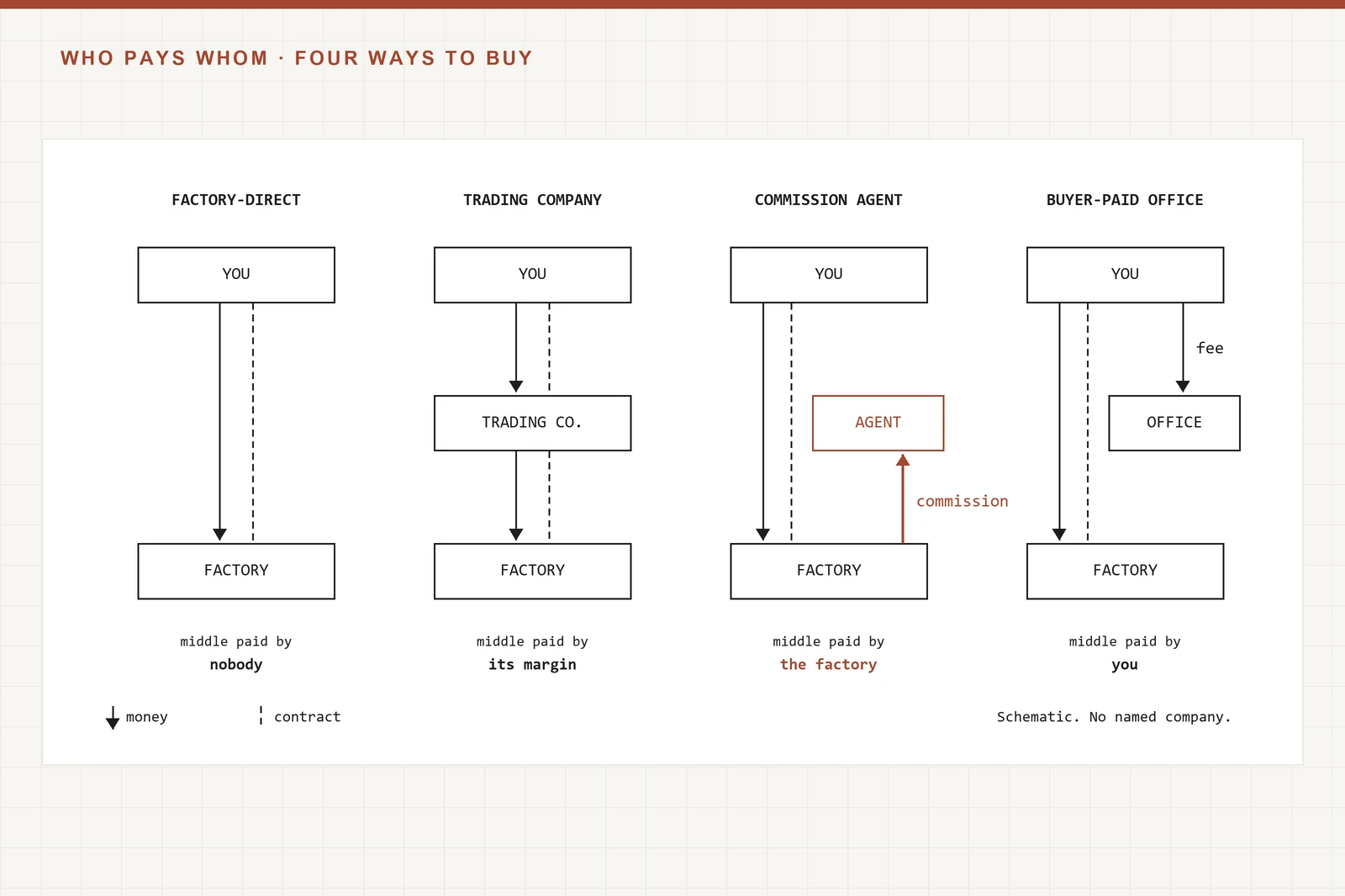
Flooring sourcing agent in Vietnam: who pays them, when you need one
Four ways to buy flooring from Vietnam, who pays the middle party in each, and how a factory-paid commission hides in the price per m².
Read the guide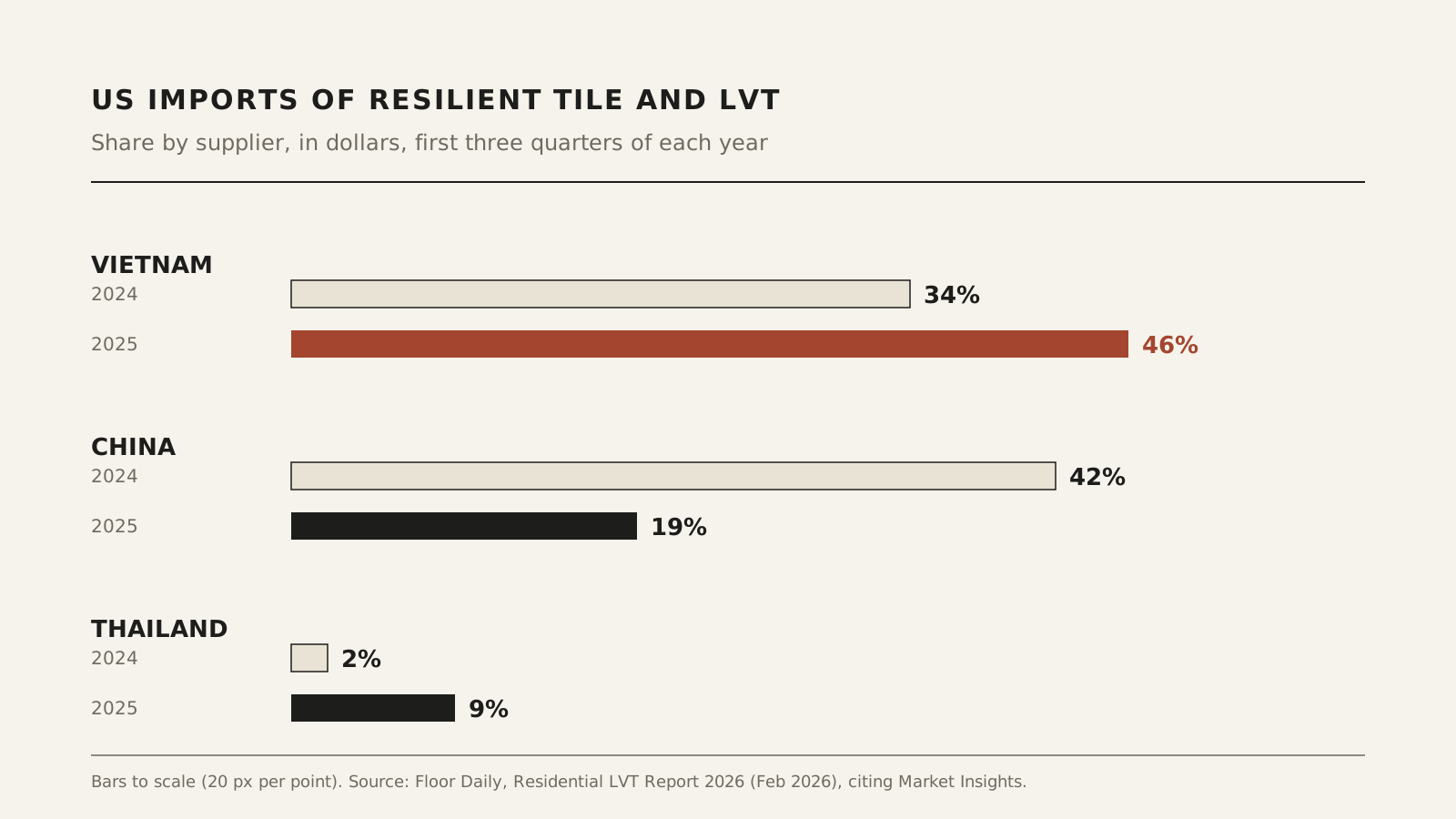
Vietnam flooring market: SPC production, US exports and trade risks
Vietnam's flooring market for importers: where SPC is made, the US import shift (34% to 46%), plant ownership, tariffs and UFLPA, with dated sources.
Read the guide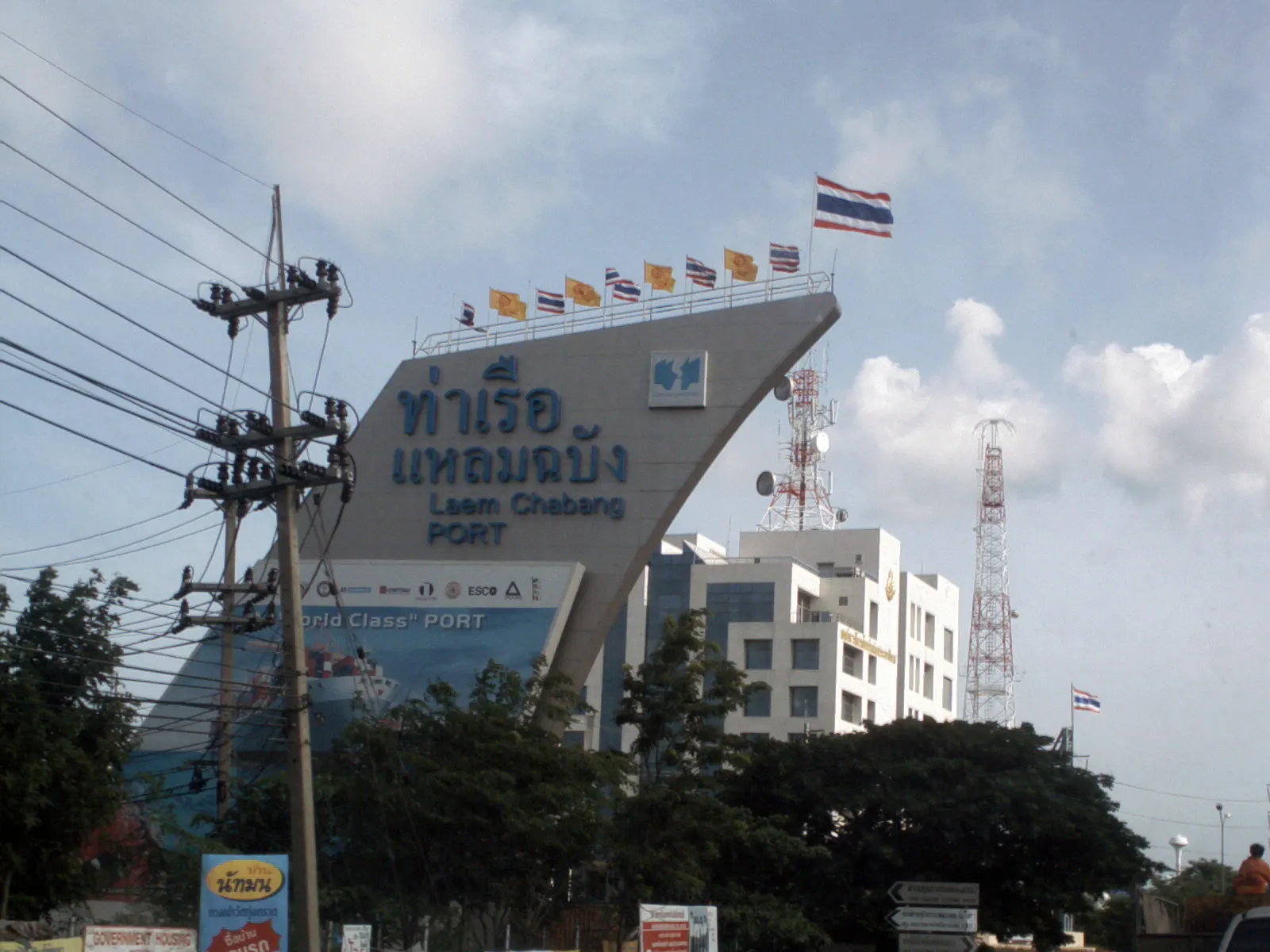
Vietnam vs Thailand SPC flooring: comparing two factory bases
Vietnam has 13 serious SPC plants, Thailand 10 SPC manufacturers in production. Scale, ports, MOQ and documents compared; US duty is level, Nov 2026.
Read the guide